When the Streets Become Rivers
It often begins with rain that feels ordinary.
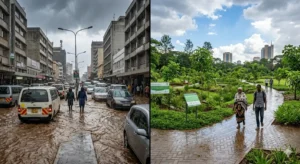
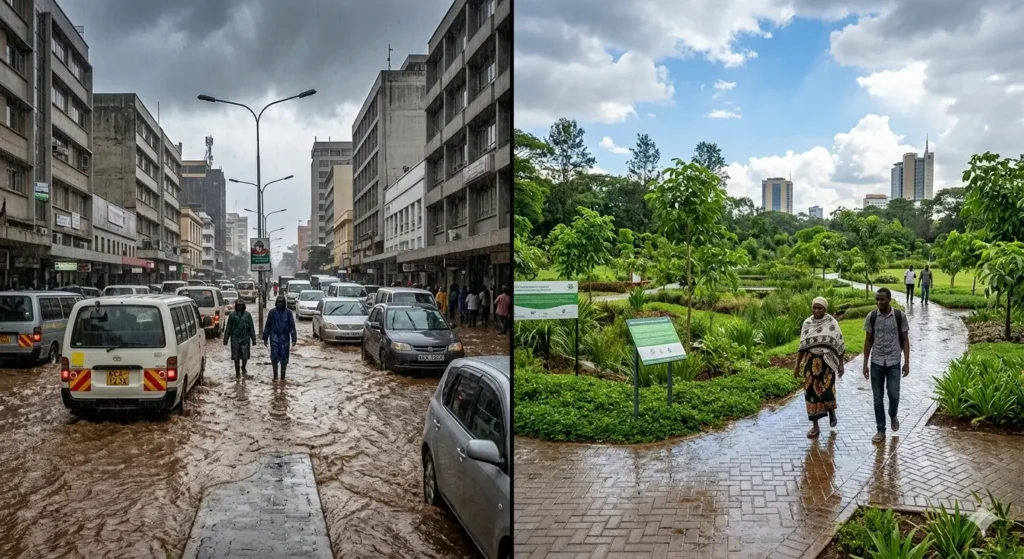
Dark clouds gather over the city. A steady drizzle turns into a heavy downpour. Within minutes, gutters overflow, roads slow to a crawl and familiar streets begin to disappear beneath moving water. Cars stall, businesses close early, and neighborhoods watch anxiously as water creeps closer to homes.
Scenes like these have become increasingly common in cities around the world, from Nairobi to New York, Mumbai to Melbourne. What once felt like rare disasters are now becoming part of the new urban reality.
For many people, the explanation seems obvious: poor drainage.
But the truth is more complex.
Urban flooding is rarely just about drains. It is about how cities are designed.
The Hidden Problem Beneath Our Feet
Rainwater does not simply disappear into pipes. It moves through an entire system – soil, vegetation, open land, rivers and finally drainage networks.
Historically, much of this work was done by nature.
Rain fell onto soil. Trees and vegetation slowed the water. The ground absorbed it gradually and released it slowly into underground aquifers and nearby rivers. Flooding was rare because the land itself acted like a sponge.
Modern cities, however, have changed this balance.
As urban areas expand, natural landscapes are replaced by roads, buildings, parking lots, and concrete pavements. Surfaces that once absorbed water are sealed.
This dramatically increases stormwater runoff, forcing rain to move rapidly across hard surfaces. Instead of soaking into the ground, water rushes across streets, overwhelming drainage systems.
This is why many cities suddenly see roads transform into rivers during heavy rainfall.
Flooding, in this sense, is not just a drainage problem, it is a design problem.
Blue Infrastructure vs Green Infrastructure
Most urban drainage systems rely heavily on what engineers call blue infrastructure.
Blue infrastructure includes:
- drainage pipes
- culverts
- canals
- stormwater tunnels
These systems are designed to move water away from cities quickly.
But pipes alone cannot carry the entire burden of increasingly intense rainfall events. Even the largest drainage systems have limits.
That is where green infrastructure becomes essential.
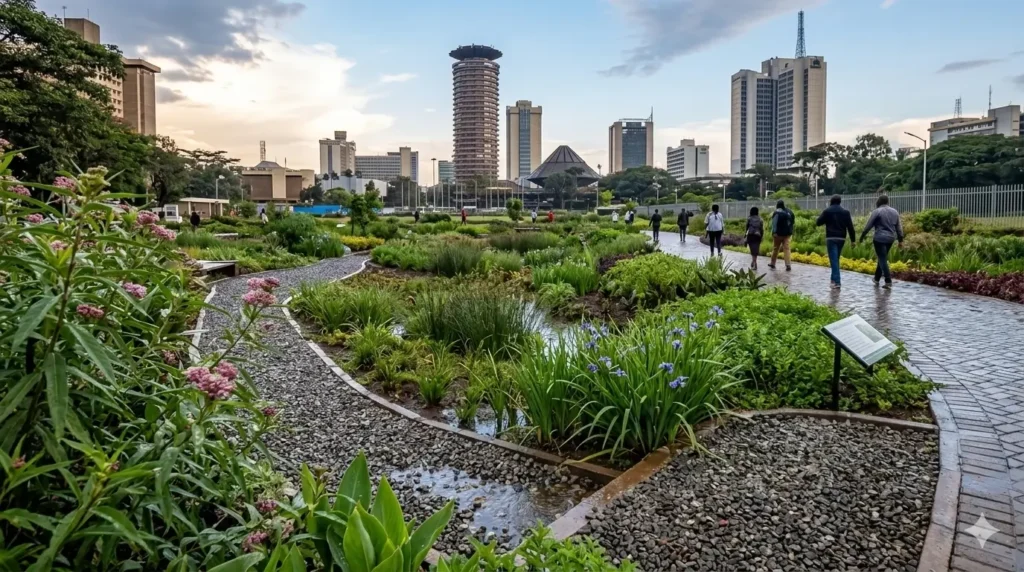
Green infrastructure refers to natural or nature-based systems that absorb and slow water before it reaches drainage systems.
Examples include:
- soil and vegetation
- parks and green corridors
- wetlands and urban forests
- rain gardens
- permeable landscapes and paving
Healthy soil can absorb significant amounts of rainfall, reducing pressure on urban drainage systems. Trees intercept rainfall through their leaves and branches. Vegetation slows water movement and stabilizes soil.
When cities integrate green infrastructure into their design, they create flood-resilient urban environments.
Organizations such as the United Nations Environment Programme and urban climate networks like the C40 Cities Climate Leadership Group have increasingly emphasized nature-based solutions as a key strategy for building climate resilient cities.
Why Public Spaces Matter More Than We Think
Public spaces are often viewed primarily as places for recreation- parks where families relax, children play and communities gather.
But these spaces also serve a crucial ecological function.
Well-designed parks, river corridors, and open landscapes allow rainwater to spread, slow down, and infiltrate the soil before reaching streets and drainage systems.
A single urban park can absorb thousands of litres of water during a storm.
Tree-lined streets reduce surface runoff. Vegetated corridors along rivers provide natural flood buffers.
In many ways, public spaces act as the lungs and kidneys of a city, helping regulate water, temperature and air quality.
When cities lose these spaces to unplanned development, they lose one of their most powerful tools for managing urban flooding.
The Role of Landscaping in Flood-Resilient Cities
Landscaping is often seen as purely aesthetic — something that makes homes and public spaces beautiful.
Yet sustainable urban landscaping is increasingly recognized as a critical part of stormwater management and climate adaptation in cities.
Thoughtful landscape design can slow water, increase infiltration and reduce flood risk.
Urban landscape specialist Mr. Wesly Museve, who leads sustainability initiatives at Eden Lawn & Garden Centre, explains:
“Flood resilience in cities will not come from bigger drainage pipes alone. It will come from restoring the natural systems that help manage water that is soil, vegetation and well-designed green spaces. When we train young people to build and maintain these systems, we are not only protecting cities from floods; we are creating jobs and shaping a more sustainable urban future.”
This perspective is increasingly shared by urban planners and environmental organizations worldwide.
Practical Flood-Resilient Landscaping Ideas for Homes
While city planning plays a major role, homeowners and communities can also take meaningful steps to manage water more effectively.
Here are practical DIY flood prevention landscaping solutions that can make a difference.
Create Rain Gardens
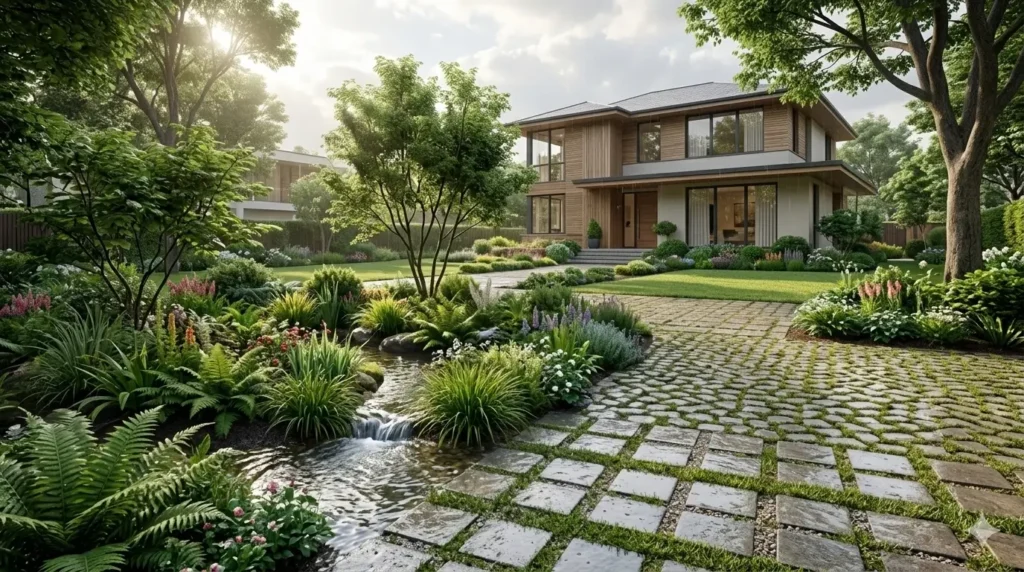
Rain gardens are shallow landscaped depressions designed to capture runoff from roofs and pavements. Filled with deep-rooted plants, they allow water to soak gradually into the ground.
Install Permeable Paving
Replacing solid concrete surfaces with permeable paving solutions, gravel paths, or spaced cabro blocks allows rainwater to infiltrate the soil rather than flowing directly into drains.
Improve Soil Health
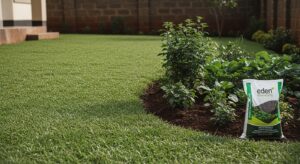
Healthy soil rich in organic matter absorbs far more water than compacted soil. Adding compost and mulch increases the soil’s capacity to store rainfall.
Plant Trees and Deep-Rooted Vegetation
Trees intercept rainfall through their canopy and improve soil structure through root systems, helping landscapes absorb water more effectively.
Redirect Roof Water
Rainwater from rooftops can be directed into gardens, rain barrels, or soak pits instead of storm drains.
Design Landscapes That Slow Water
Features such as swales, berms, and natural drainage channels help slow runoff across properties.
When multiplied across thousands of homes, these small interventions collectively reduce pressure on city drainage systems.
Building a Green Workforce for Climate Resilience
Recognizing the growing need for climate-responsive landscapes, Eden Lawn & Garden Centre has launched the Green Workforce for Climate Resilience Initiative (GWCRI).
This initiative focuses on equipping young people with practical skills in:
- sustainable landscaping
- urban greening
- soil restoration
- tree planting
- green infrastructure installation
- stormwater management systems
By training a new generation of skilled practitioners, the program aims to turn urban greening into a practical and scalable solution for cities.
Collaboration Is Key
Building flood-resilient cities requires collaboration between communities, organizations, and institutions.
Organizations such as 82 Sports are demonstrating how sport and environmental stewardship can work together. Through its Play for Green Spaces Initiative, the organization promotes grassroots football while encouraging communities to protect and develop green public spaces.
As the CEO of 82 Sports explains:
“We believe the future of sports lies in innovation and inclusivity.”
Similarly, civic groups like Public Space Network, led by Nina, are working to reclaim and activate public spaces so they can serve both social and environmental functions within urban areas by empowering communities to transform neglected public spaces into clean, green, safe, productive, inclusive and climate‑resilient community assets.
These initiatives highlight a growing recognition that the future of cities depends on protecting and expanding green spaces.
The Future of Cities Is Green
Urban flooding is not simply a crisis to respond to after storms occur.
It is a signal that cities must rethink how they grow.
Cities that invest in green infrastructure, urban green spaces and sustainable landscaping will not only manage storms better but will also become healthier, cooler, and more livable places.
Because when the next heavy rain comes and it will – the real question will not simply be whether the drains can cope.
The real question will be whether our cities have remembered how to work with nature again.
About the Author
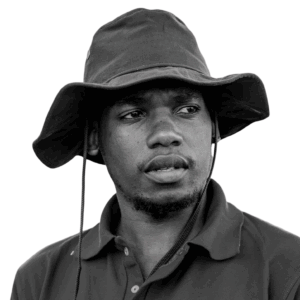
Wesly Museve is an urban landscape specialist and sustainability advocate working at the intersection of landscaping, climate resilience and urban development. Through his work with Eden Lawn & Garden Centre, he leads initiatives focused on sustainable landscape design, urban greening, and youth empowerment. Through the Green Workforce for Climate Resilience Initiative (GWCRI), he is committed to equipping young people with the skills needed to build greener, more resilient cities.
Call to Action
If you are a homeowner, developer, school, institution, or community group interested in sustainable landscape design, stormwater management solutions, or urban greening projects, Eden Lawn & Garden Centre is ready to support you.
Visit us at Teco Mall, Mombasa Road – Nairobi, call or WhatsApp 0792478000, or explore www.edenlg.co.ke to learn more about our landscaping services, professional consultations and training opportunities under the Green Workforce for Climate Resilience Initiative.
Because the future of our cities will not only be built with concrete, it will be grown.